




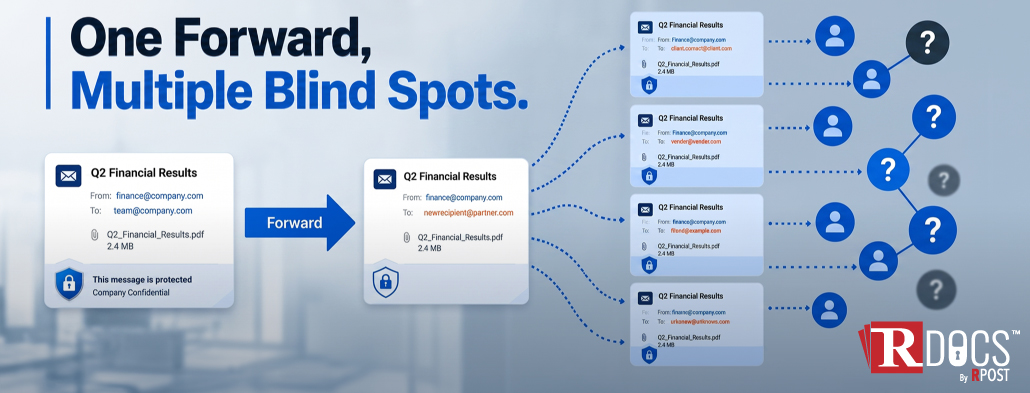
That is increasingly how sensitive information leaves organizations today.
Enterprises already know that the inbox is one of the easiest ways for attackers to get into the business. The real question is narrower: when vendors say they use AI-based email security, what actually changes compared with rule-based, traditional email security?

Just a year or so ago, email security was mostly about blocking what looked obviously bad, such as known malicious links, suspicious attachments, spoofed domains, and spammy language. All of that is still relevant, but today’s attacks often look normal, timely, and believable with AI. And it’s why AI itself has become critical in email security.
Organizations spend significant budgets on firewalls, endpoint protection, and access controls. Yet year after year, the most consistent source of data breaches isn't a sophisticated exploit — it's a person making a mistake. And when that mistake involves a sensitive document, the consequences can be immediate and severe.
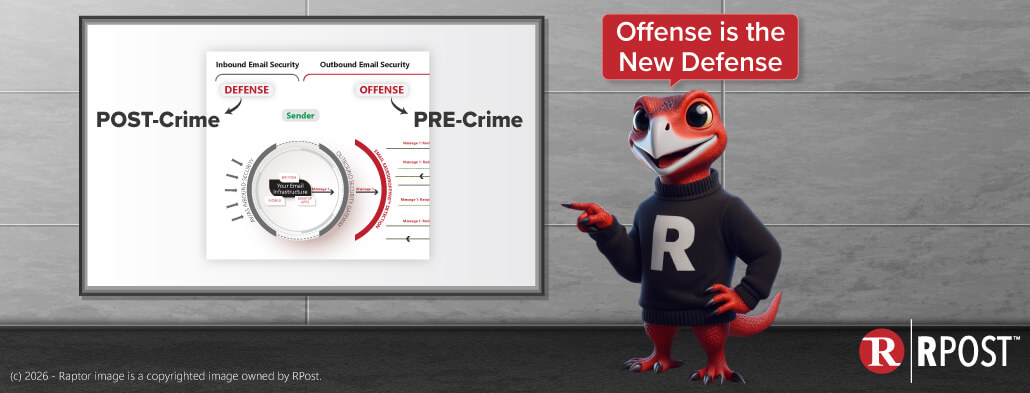
Rocky the Raptor here, RPost’s cybersecurity product evangelist. Let’s talk about something big - not incremental, not evolutionary, but a fundamental shift in cybersecurity.
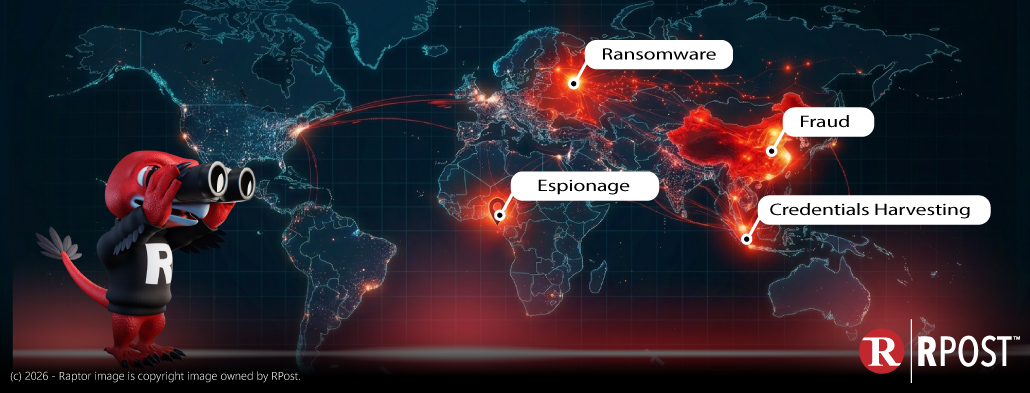
Rocky the Raptor here, RPost’s cybersecurity product evangelist. If you’ve ever listened to cybersecurity threat hunters talk shop, you’ll hear a phrase that pops up again and again: “We’re trying to attribute the attack.”

Rocky the Raptor here, RPost’s cybersecurity product evangelist, with some early 2026 insights.
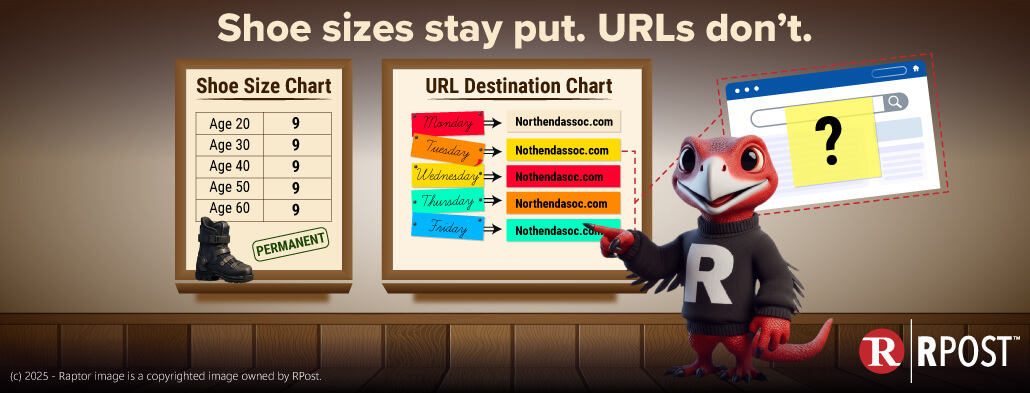
Rocky the raptor here, RPost’s cybersecurity product evangelist. I was in the ski shop the other day, doing what every raptor does around the holidays: soaking in the gear aisle and pretending I need new equipment 😊 I spotted a shiny new ski boot buckle gadget. Sleek. Clever. Possibly unnecessary.

May 08, 2026

April 24, 2026

April 14, 2026

April 03, 2026
March 27, 2026