



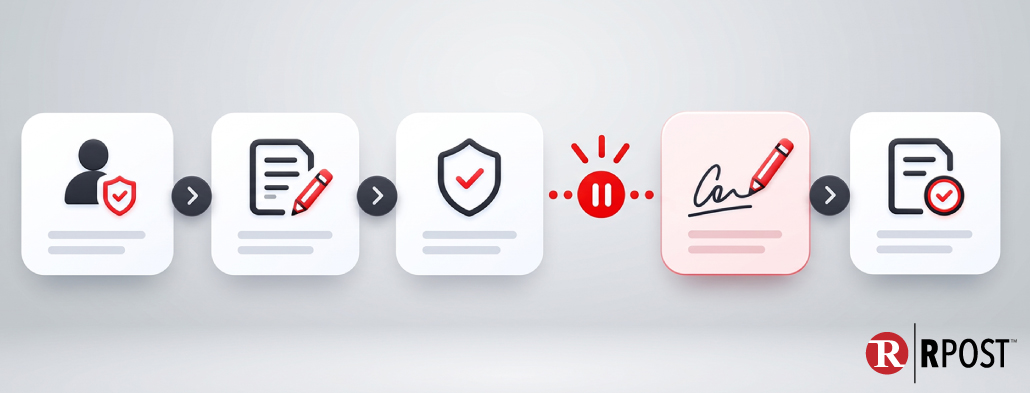
In many business processes, getting the signature is only one part of the workflow. Information may need to be collected first; documents need to be prepared and approved; participants have to be authenticated; and after signing, agreements may still need to be securely delivered, recorded, shared, protected, or acted on by other systems.
This is the core reason behind the shift toward integrated signing workflows.
The challenge usually appears in the handoffs. One system collects the information, another prepares the agreement, another handles the signature, and separate tools may take over for delivery, storage, security, or follow-up. Each handoff can create friction, leading to poor visibility into status, responsibility, evidence, or control.
This becomes more important where agreements carry regulatory, financial, privacy, or legal consequences. A disconnected step can mean more manual follow-up, an incomplete record of what happened, or inconsistent controls as the agreement moves between systems and participants.
AI is becoming another participant in these processes. Agents can increasingly prepare documents, extract information, route work, and trigger follow-up actions. That creates another practical requirement: organizations need to understand what an AI agent can access, what it is permitted to do, and what happens to the content as the transaction moves forward.
IDC recently named RPost a Leader in the IDC MarketScape: Worldwide Integrated Signing Workflow Software 2026 Vendor Assessment. The assessment looks beyond the signature event to the wider workflow surrounding it.
RPost supports that process across RForms™ for information collection, RSign® for approvals and signatures, Registered Email™ for delivery proof, RMail® for secure communications, and RDocs® for continued document control. RAPTOR™ AI adds automation, security intelligence, and controls as transactions move between people, applications, external parties, and AI-driven processes.
The question for enterprises now is: how many separate handoffs does it take to get from information collection to a completed, delivered, and controlled agreement?
If you’re reviewing an existing signing process, ask another question too: are you losing visibility, evidence, security, or control as the agreement moves from one stage to the next?
It’s where the next phase of eSignature workflow automation starts - connecting the work around the signature, not simply automating the signature itself. We can help; let’s talk!
November 12, 2026
October 22, 2026
September 30, 2026
September 10, 2026

August 28, 2026


 Industry Insights
